How Contractors Can Invest in Growth Without Draining Cash Flow
For construction companies, the right equipment can make the difference between bidding on a project and having to pass on it.
Excavators, skid steers, loaders, dump trucks, cranes, compactors, and specialized tools can improve productivity and expand the types of jobs a contractor can pursue. But purchasing equipment outright can require a significant amount of capital.
That creates an important question for construction business owners:
Should you use cash to purchase equipment—or preserve that cash for payroll, materials, insurance, fuel, and the next project?
Construction equipment financing may provide another option.
Instead of using a large portion of your available cash to purchase machinery, financing can allow qualified construction companies to spread the cost over time while putting the equipment to work in the business.
At Upfinity Capital, we help business owners evaluate funding options based on their goals, financial position, and anticipated use of capital.
What Is Construction Equipment Financing?
Construction equipment financing is a form of business financing designed to help companies acquire machinery, vehicles, and other equipment needed to operate or expand.
In many equipment financing structures, the equipment being purchased may serve as collateral for the financing. Depending on the program, the business may make scheduled payments over an agreed-upon term rather than paying the entire purchase price upfront.
Qualification requirements, repayment terms, down payments, rates, and financing amounts can vary considerably. All financing remains subject to underwriting and the specific requirements of the funding provider.
For contractors, equipment financing can be especially useful because heavy equipment often represents one of the largest capital investments required to operate a construction business.
What Types of Construction Equipment Can Be Financed?
Depending on the funding program and the condition and value of the equipment, financing may be available for:
- Excavators, bulldozers, backhoes, skid steers, loaders, cranes, forklifts, dump trucks, trailers, concrete equipment, grading machinery, generators, compressors, landscaping equipment, specialty trade equipment, and other commercial construction machinery.
Both new and used equipment may be eligible under certain programs, although requirements can differ based on equipment age, condition, expected useful life, seller, and financing structure.
Why Construction Companies Use Equipment Financing
Construction businesses operate in a capital-intensive industry.
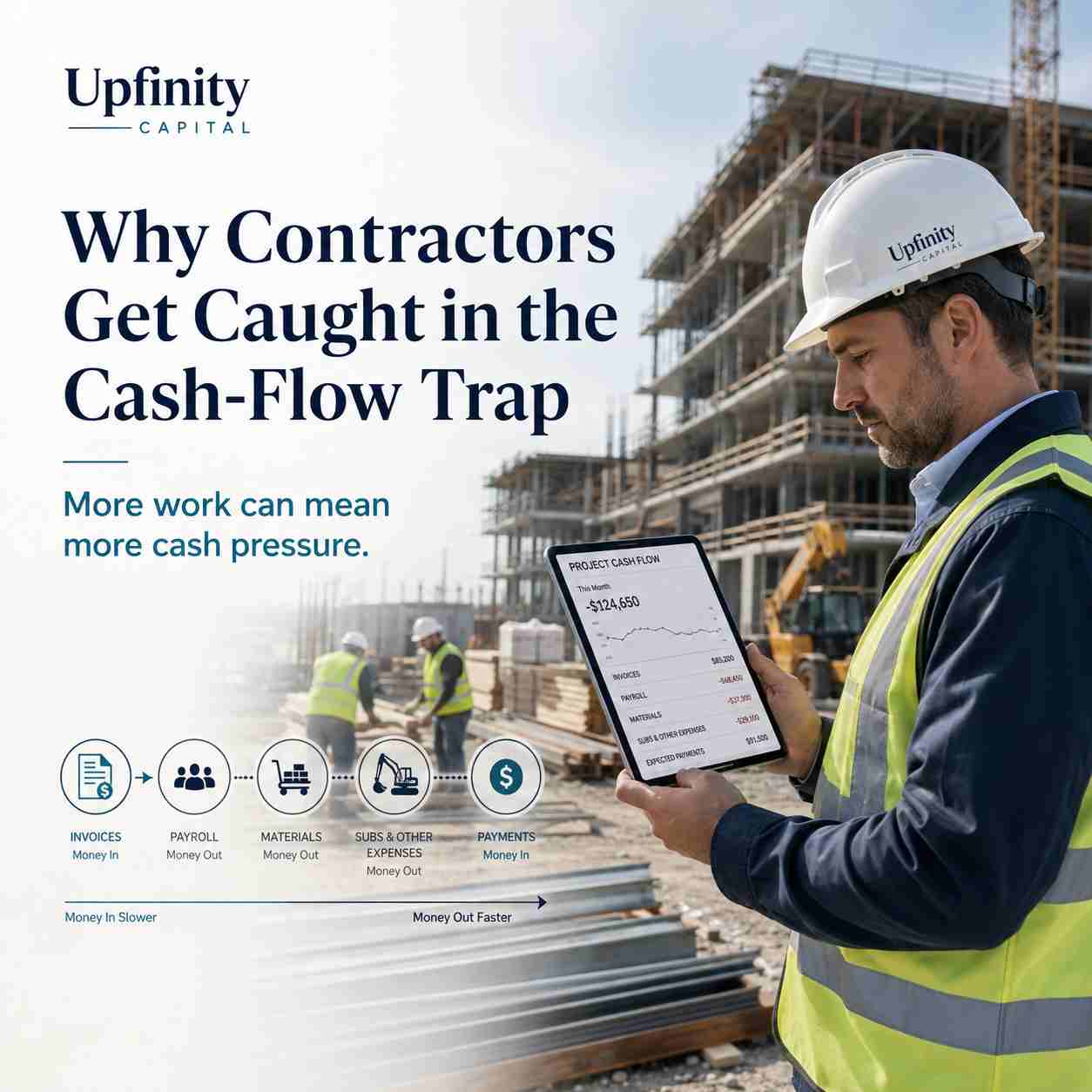
A contractor may have profitable projects underway while still carrying substantial expenses before receiving final payment. Labor must be paid. Materials must be purchased. Subcontractors may require deposits. Fuel, insurance, maintenance, and project overhead continue regardless of when customers pay.
Using $100,000 or more of available cash for a single equipment purchase can therefore affect much more than the company’s equipment budget.
It can affect the company’s working capital.
Equipment financing may allow a contractor to acquire an income-producing asset while keeping more cash available for the everyday expenses that keep projects moving.
Preserve Working Capital for Projects
Cash reserves provide flexibility.
Imagine a contractor has enough money available to purchase a new excavator outright. Paying cash eliminates the need for financing, but it also immediately reduces the company’s liquidity.
A few weeks later, the company could win a large project requiring additional labor, materials, mobilization costs, or subcontractor deposits.
The contractor may own the excavator free and clear—but now have less cash available to start the project.
Financing the equipment instead may allow the company to preserve some of that capital for project-related expenses.
The right decision depends on the company’s cash flow, financing costs, expected equipment utilization, project pipeline, and overall financial strategy.
Use Equipment to Increase Capacity
One of the most important questions before financing equipment is:
How will this equipment help the business generate or protect revenue?
Equipment financing tends to make the most strategic sense when the equipment has a clear operational purpose.
A new machine might allow a contractor to complete jobs faster. It might reduce equipment rental expenses. It could eliminate dependence on subcontractors for certain work. It may allow the company to pursue larger projects or add an entirely new service.
For example, an excavation contractor that consistently rents a skid steer may determine that owning one could improve scheduling flexibility and reduce long-term rental expenses.
A concrete contractor might acquire additional finishing equipment to handle multiple jobs simultaneously.
A general contractor might invest in specialized equipment that allows the company to self-perform work previously outsourced to another company.
The goal is not simply to own more equipment.
The goal is to acquire equipment that supports a sound business strategy.
Equipment Financing vs. Paying Cash
Paying cash can make sense when a company has substantial liquidity and the purchase will not interfere with operations or future opportunities.
Financing may make more sense when preserving cash has strategic value.
The comparison should go beyond the equipment’s purchase price.
Consider how much cash the company needs for upcoming projects, payroll, materials, taxes, insurance, maintenance, and unexpected expenses. Then compare those needs with the total cost of financing.
A lower cash balance can become expensive if it later forces the business to seek emergency capital or decline a profitable project.
Construction owners should therefore evaluate the opportunity cost of using cash, not simply the interest or financing cost.
Equipment Financing vs. Leasing
Construction companies may also consider leasing.
With equipment financing, the goal is commonly ownership of the equipment once the financing obligation has been satisfied. Leasing typically involves paying for the right to use the equipment for a specified period, although some leases may include purchase options.
Neither approach is automatically better.
Companies that use equipment heavily for many years may prefer ownership. Contractors using technology or machinery that becomes outdated quickly may prefer greater flexibility.
Tax and accounting treatment can also vary, so contractors should discuss major equipment acquisitions with their accountant or tax professional before making a final decision.
What Do Lenders Look for When Financing Construction Equipment?
Underwriting standards vary by funding source, but a financing provider may evaluate several aspects of the business.
These can include company revenue, time in business, business and personal credit history, recent bank activity, existing debt obligations, cash flow, equipment value, equipment age, purchase price, vendor information, and the owner’s overall financial profile.
A stronger application typically gives the funding provider a clear picture of both the business and the equipment being acquired.
Before seeking financing, construction companies should organize current financial information and know exactly what equipment they want to purchase.
That preparation may make it easier to identify appropriate funding options.
New Equipment vs. Used Equipment Financing
Buying used equipment can reduce the initial investment, making it attractive to contractors focused on controlling costs.
However, older equipment can bring additional maintenance risk.
Before financing used construction equipment, consider the machine’s maintenance history, operating hours, expected remaining useful life, resale value, availability of replacement parts, and inspection results.
The lowest purchase price does not necessarily create the lowest total cost of ownership.
A more expensive machine with lower maintenance requirements and greater reliability may ultimately be more valuable to the business.
Calculate the Return Before You Finance
Construction equipment should ideally contribute to revenue, efficiency, or cost savings.
Before committing to a purchase, estimate how frequently the equipment will be used and what financial impact it could have.
Suppose a contractor is considering a piece of equipment that would reduce rental costs by several thousand dollars each month while also allowing the company to complete additional projects.
That makes the financing decision easier to evaluate.
Compare the anticipated monthly financial benefit of owning the equipment with the expected payment, maintenance, insurance, transportation, storage, and operating costs.
A financing payment should fit comfortably within the company’s broader cash-flow plan.
Don’t Forget the Costs Beyond the Purchase Price
The purchase price is only one part of owning construction equipment.
Heavy machinery may require insurance, maintenance, repairs, fuel, operators, storage, transportation, permits, attachments, replacement parts, and periodic upgrades.
These expenses should be included in your financial projections before you finance equipment.
A contractor who can afford the equipment payment but not its ongoing operating costs may create unnecessary pressure on working capital.
When Equipment Financing May Make Sense
Construction equipment financing may be worth considering when your company has steady demand for the equipment, expects the asset to increase operational capacity, wants to reduce recurring rental expenses, needs to preserve working capital, or has an opportunity to pursue projects that require additional machinery.
It can also be useful when existing equipment is becoming unreliable.
Unexpected equipment breakdowns can disrupt schedules, increase labor costs, and jeopardize project deadlines. Replacing aging machinery before a major failure may sometimes be more financially responsible than repeatedly repairing equipment that is approaching the end of its useful life.
Equipment Financing Is Part of a Larger Capital Strategy
Equipment is only one component of construction cash flow.
A growing contractor may simultaneously need money for materials, payroll, bonding, insurance, subcontractors, mobilization costs, fuel, marketing, or expansion.
That is why equipment financing should be evaluated as part of the company’s broader capital plan.
In some situations, a contractor may benefit from financing equipment separately while preserving other funding resources for working capital.
The objective is to match the financing solution with the business need rather than relying on one type of capital for every expense.
Frequently Asked Questions About Construction Equipment Financing
Can startup construction companies finance equipment?
Potentially. Some funding programs may consider newer businesses, while others require an established operating history. Credit profile, equipment value, owner experience, available capital, and other underwriting factors may also affect eligibility.
Can used construction equipment be financed?
Used equipment may qualify under certain programs. Financing availability often depends on the equipment’s age, condition, value, seller, and remaining useful life.
Does equipment financing require a down payment?
Some programs may require a down payment while others may offer different structures based on the applicant’s qualifications. Terms are subject to underwriting.
Can contractors finance multiple pieces of equipment?
Potentially. Financing availability will depend on the total purchase amount, business financials, existing obligations, equipment values, and underwriting requirements.
Will equipment financing affect business cash flow?
Yes. Financing creates an ongoing payment obligation, so business owners should make sure anticipated payments fit within projected cash flow. The potential benefit is that financing may preserve more upfront cash than purchasing equipment outright.
Build Your Construction Business With the Right Capital Strategy
Construction companies grow by having the people, equipment, and capital necessary to take advantage of the right opportunities.
But growth should not require putting unnecessary pressure on cash flow.
Construction equipment financing may allow qualified contractors to acquire essential machinery while preserving capital for the expenses that keep projects moving.
The best financing strategy depends on the equipment being purchased, the company’s financial position, its existing obligations, and the expected return on the investment.
Upfinity Capital can help you explore business funding options designed around your company’s goals.
See what funding options you may qualify for:
All financing is subject to underwriting, approval criteria, program availability, and applicable terms. Funding amounts, rates, repayment structures, and qualification requirements vary by applicant and financing provider.